
By Karachi Psychiatric Hospital Editorial Team | Medically Reviewed by Consultant Psychiatrists | July 2026
“One day, Ali was planning to start three businesses, learn Spanish in a week, and redecorate his room at 2 a.m. The next week, he couldn’t even get out of bed to answer a simple phone call. His family thought he was just ‘moody.’ But it wasn’t moodiness; it was bipolar disorder.”
Many people think bipolar disorder is just about having “good days and bad days.” It isn’t. It is a real mental health condition that affects emotions, thoughts, energy, and daily life.
The good news? With the right bipolar treatment, people can manage their symptoms, enjoy healthy relationships, build successful careers, and live fulfilling lives. Sometimes, all it takes is recognizing the signs early and asking for help.
Let’s understand bipolar disorder.

What Is Bipolar Disorder?
Bipolar disorder is a mental health illness that causes significant fluctuations in a person’s mood, energy, and emotions. A person may feel very energetic, excited, or unusually confident during one phase, and then feel deeply sad, hopeless, or exhausted during another.
According to the National Institute of Mental Health (NIMH), bipolar disorder is characterized by episodes of mania or hypomania and depression that affect mood, energy, and daily functioning.
These mood changes are much greater than normal ups and downs. They can affect work, studies, family life, and relationships.
The two main mood episodes are:
- Mania and hypomania
- Depression
Understanding Mania and Hypomania
Imagine drinking ten cups of coffee, except you didn’t. That’s a bit like what mania and hypomania can feel like.
During mania or hypomania, a person may:
- Feel extremely happy or excited
- Talk much faster than usual
- Sleep very little but still feel energetic
- Make risky decisions, such as spending too much money
- Feel unusually confident or believe they can do anything
- Find it difficult to focus because their thoughts race
Mania is more severe and can seriously affect daily life. Hypomania is a milder form but still needs medical attention because it can become worse over time.
What Does Depression Feel Like?
The other side of bipolar disorder is depression.
During a depressive episode, a person may:
- Feel sad for weeks
- Lose interest in hobbies and family activities
- Sleep too much or too little
- Feel tired all the time
- Have difficulty concentrating
- Feel hopeless or worthless
This isn’t laziness or weakness. It is a medical condition that requires proper mental health treatment.
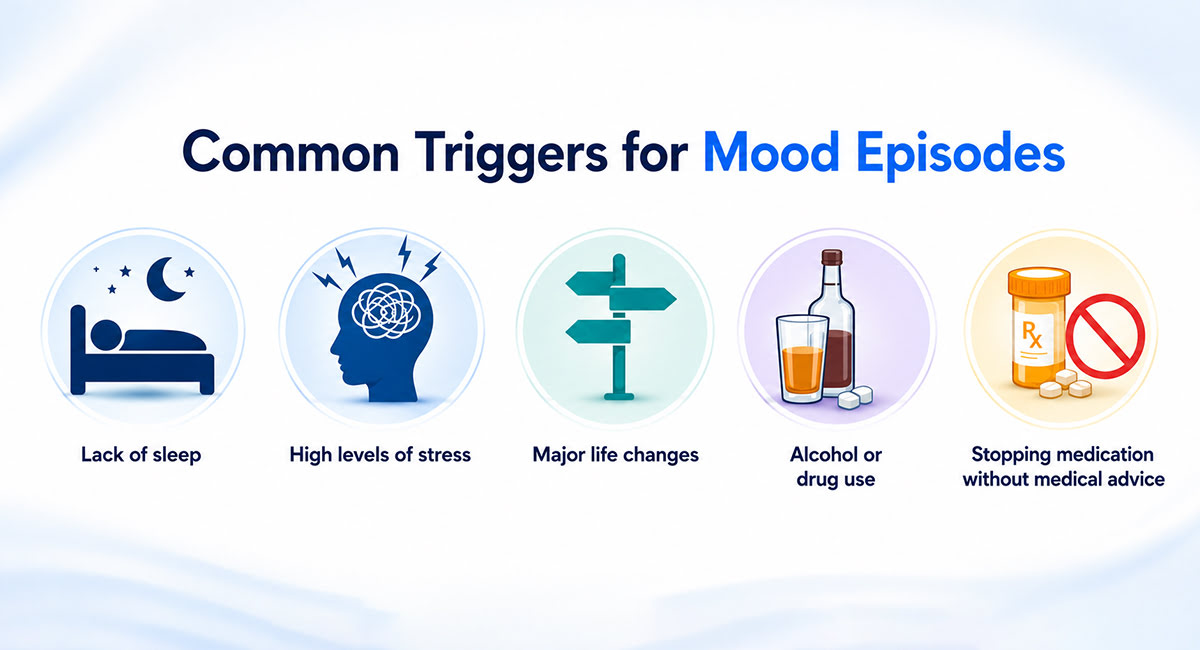
Common Triggers for Mood Episodes
Although bipolar disorder isn’t caused by stress alone, certain factors can trigger mood episodes, including:
- Lack of sleep
- High levels of stress
- Major life changes
- Alcohol or drug use
- Stopping medication without medical advice
Recognizing personal triggers can help reduce the risk of relapse.
How Is Bipolar Disorder Diagnosed?
There is no single test for bipolar disorder. A psychiatrist diagnoses it through a comprehensive assessment of symptoms, mood history, medical history, and when appropriate, family history. They may also rule out other medical conditions that can cause similar symptoms.
Early treatment makes a big difference.
Is Bipolar Disorder Curable?
According to the World Health Organization (WHO), bipolar disorder is a chronic mental health condition that can be effectively managed with appropriate treatment and ongoing support, allowing many people to lead productive and fulfilling lives.
Bipolar disorder is usually a long-term mental health condition that requires ongoing care. Although there is currently no cure, evidence-based treatments, including medication, psychotherapy, and healthy lifestyle habits, can help many people effectively manage symptoms, reduce the frequency and severity of mood episodes, and maintain a good quality of life. Treatment plans should be developed with a qualified mental health professional.
Can Therapy Help Bipolar Disorder?
Yes.
Many people ask, “Can therapy help bipolar disorder?“
The answer is yes; therapy plays an important role alongside medication.
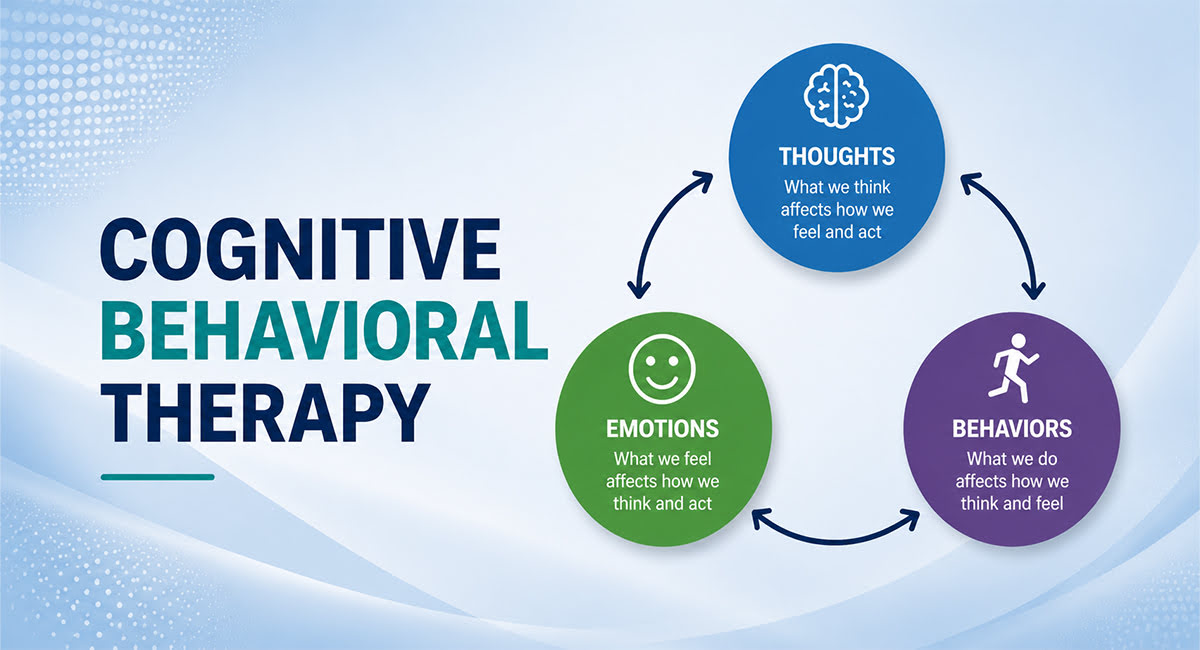
One of the most effective approaches is cognitive therapy, also called Cognitive Behavioral Therapy (CBT).
Clinical guidelines recommend psychotherapy, including Cognitive Behavioral Therapy (CBT), as an important part of treatment alongside medication for many people with bipolar disorder.
It helps people:
- Understand unhealthy thinking patterns
- Manage stress
- Recognize early warning signs of mood changes
- Develop healthy daily routines
- Improve communication and relationships
Therapy is not about lying on a couch while someone silently writes notes. It’s a practical conversation that teaches useful skills for everyday life.
How Is Bipolar Disorder Treated?
Every person’s treatment plan is different.
A complete bipolar treatment plan may include:
1. Medication:
Psychiatrists may prescribe mood stabilizers or other medications to help manage symptoms safely.
2. Cognitive Therapy:
Therapy helps people build healthy coping skills and manage emotional changes.
3. Lifestyle Changes:
Simple habits can support recovery, such as:
- Getting enough sleep
- Exercising regularly
- Eating balanced meals
- Avoiding alcohol and recreational drugs
- Managing stress
4. Family Support:
When families understand bipolar disorder, they can provide better emotional support and recognize early signs of relapse.
What Happens If Bipolar Disorder Goes Untreated?
This is one of the most important questions.
Without proper psychiatric treatment for bipolar disorder, symptoms often become more severe over time.
Untreated bipolar disorder may lead to:
- Problems at work or school
- Financial difficulties due to impulsive decisions
- Relationship conflicts
- Substance misuse
- Frequent emotional crises
- Increased risk of self-harm or suicide
Ignoring bipolar disorder is like ignoring a leaking roof during the rainy season. It usually doesn’t fix itself; it often gets worse.
Can Bipolar Disorder Be Misdiagnosed?
Yes. Bipolar disorder is sometimes initially misdiagnosed as depression because many people seek help during depressive episodes before experiencing or reporting manic or hypomanic symptoms. A comprehensive psychiatric evaluation, including a detailed medical and mental health history, is important for distinguishing bipolar disorder from depression and other mental health conditions and ensuring appropriate treatment.
When Should I See a Psychiatrist For Bipolar Disorder?
If mood shifts are affecting your relationships, work, sleep, or safety, that’s your sign. You don’t need to wait until things become unmanageable.
Consider seeing a psychiatrist if you notice:
- Mood swings that are more intense or longer-lasting than usual
- Impulsive decisions that cause problems at work, at home, or with finances
- Sleep patterns that swing between barely sleeping and not wanting to get up
- Friends or family repeatedly point out that your highs and lows seem extreme
- Episodes of sadness or depression that make everyday activities more difficult
Early evaluation from the best psychiatrist in Karachi can help identify patterns before they escalate. A good rule of thumb: if people close to you have gently (or not so gently) pointed out that your highs and lows seem extreme, it’s worth getting a professional opinion rather than a group chat consensus.

Why Karachi Psychiatric Hospital?
At Karachi Psychiatric Hospital, we understand that reaching out for mentalhealth treatment can feel intimidating, like admitting something is “wrong.” But asking for help isn’t weakness; it’s the most functional decision a person can make for their own behavioral health.
At Karachi Psychiatric Hospital, patients receive:
- Comprehensive psychiatric assessment
- Personalized treatment plans
- Evidence-based therapy
- Confidential and compassionate care
- Ongoing support for long-term recovery
Our team specializes in bipolar disorder treatment in Pakistan, combining psychiatric care with therapy-based support so patients don’t have to piece their recovery together alone.
Closing Thoughts
Living with bipolar disorder can be difficult, but you are not alone. With an early diagnosis and the right treatment, you can manage your symptoms, feel better, and enjoy a healthier, more balanced life.
If you or someone you care about is experiencing symptoms of bipolar disorder, don’t ignore the signs. Reach out to the experienced mental health team at Karachi Psychiatric Hospital for a confidential consultation. Our psychiatrists and therapists provide personalized care, evidence-based treatments, and ongoing support to help you manage bipolar disorder and regain control of your life.
Book your appointment today.
FAQs
What are the first signs of bipolar disorder?
Early signs include intense mood swings, high energy, reduced need for sleep, impulsive behavior, or prolonged sadness that affects daily life. A psychiatrist can confirm the diagnosis.
Can bipolar disorder be treated without medication?
Medication is a cornerstone of treatment for many people with bipolar disorder. Treatment plans vary by individual and should be developed with a psychiatrist.
Is bipolar disorder hereditary?
Family history can increase the risk, but genetics alone do not cause bipolar disorder. Environmental and biological factors also play a role.
How is bipolar disorder diagnosed?
A psychiatrist diagnoses bipolar disorder through a comprehensive assessment of symptoms, medical history, and mood patterns. There is no single diagnostic test.
Can people with bipolar disorder live a normal life?
Yes. With proper treatment, therapy, and ongoing support, many people manage bipolar disorder successfully and lead fulfilling lives.
References:
- National Institute of Mental Health. Bipolar Disorder.
- World Health Organization. Mental disorders, Bipolar disorder.
- American Psychiatric Association. Practice Guideline for the Treatment of Patients with Bipolar Disorder.
- National Institute for Health and Care Excellence (NICE). Bipolar disorder: assessment and management (NG222).
Disclaimer:
This blog is for general awareness only and isn’t a substitute for a professional diagnosis. If you or someone you know is struggling, please reach out to a licensed mental health professional for proper evaluation and support.